Paus Leo XIV Terbitkan Ensiklik Magnifica Humanitas Terkait AI

Published
·
1 Reads
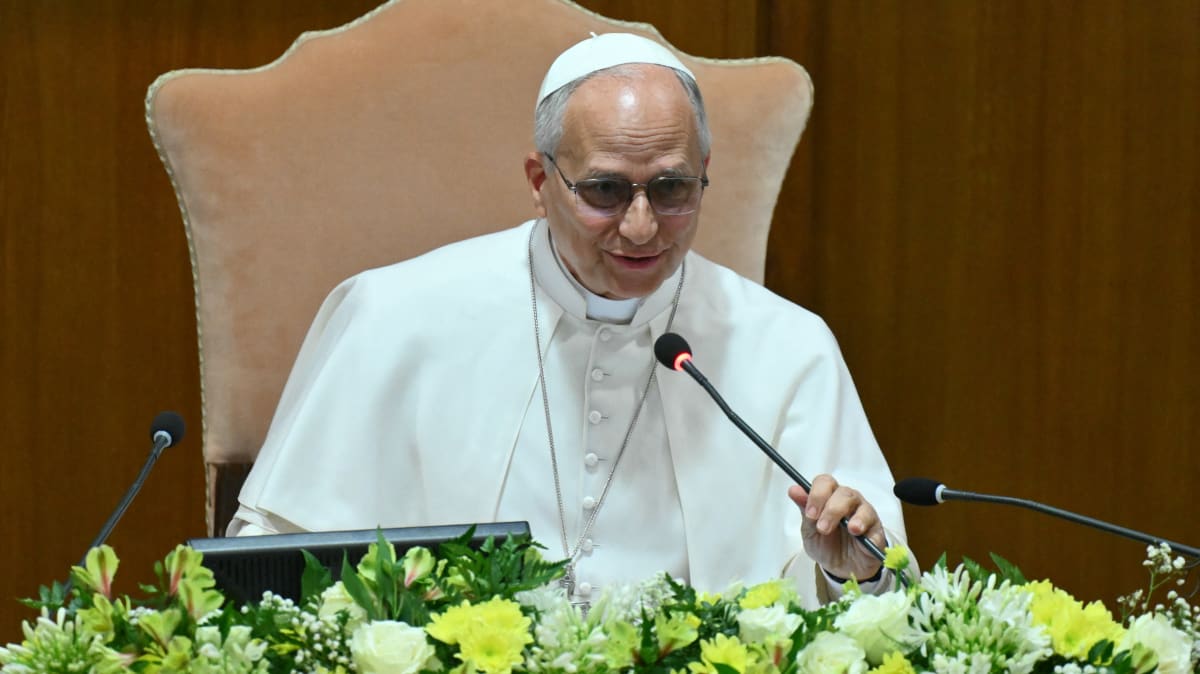
Paus Leo XIV resmi merilis surat ensiklik pertamanya berjudul "Magnifica humanitas: On safeguarding the human person in the time of artificial Intelligence" di Vatikan pada Senin, 25 Mei 2026. Dokumen teologis utama ini memperingatkan bahaya kendali kecerdasan buatan (AI) yang terpusat di tangan segelintir pihak serta perannya dalam memicu konflik dunia.
Dilansir dari CNN, pemimpin tertinggi Gereja Katolik tersebut mendesak adanya pengawasan yang lebih ketat terhadap perkembangan AI yang sangat masif. Paus Leo XIV menilai teknologi ini berpotensi menggeser tenaga kerja manusia, memperdalam ketimpangan global, hingga menempatkan keputusan senjata mematikan di luar kendali moral manusia.
Peluncuran dokumen setebal 42.300 kata tersebut turut menghadirkan salah satu pendiri laboratorium AI Anthropic, Chris Olah, sebagai bagian dari inisiatif untuk memperluas dialog global. Kehadiran figur industri teknologi dalam presentasi kepausan ini mencetak momentum interaksi yang jarang terjadi sebelumnya antara otoritas agama dan taipan teknologi.
"Good morning to all of you. It’s an honor to be here today." kata Chris Olah, Co-founder Anthropic.
Olah menjelaskan bahwa seluruh laboratorium garis depan, termasuk Anthropic, beroperasi di bawah tekanan insentif komersial, batas riset, geopolitik, serta ambisi pribadi yang terkadang bertentangan dengan tindakan moral yang benar.
"Every frontier AI lab—including Anthropic—operates inside a set of incentives and constraints that can sometimes conflict with doing the right thing. The pressure to stay commercially viable and to stay at the research frontier. Geopolitical pressure. And the older, plainer pressures of pride and ambition." ujar Chris Olah, Co-founder Anthropic.
Ia menambahkan pentingnya kehadiran pihak eksternal di luar lingkaran insentif komersial tersebut yang bersedia memberikan kritik jujur demi menjaga aspek keselamatan manusia.
"No matter how sincerely any of us intend to do the right thing—and I believe many of us do—we will always be influenced by those incentives. That is why, if we want this technology to go well, it is enormously important that there be people outside those incentives—people who care about things going well and insist on safety, who are paying close attention, who are willing to say hard things, who are willing to be our earnest, thoughtful, critics." sambung Chris Olah, Co-founder Anthropic.
Melalui dialog dan upaya bersama, ia meyakini umat manusia dapat mencapai hal-hal besar, sebagaimana yang tercermin dalam ensiklik Magnifica Humanitas.
"It is through dialogue and mutual effort, through the push and pull, that humanity will achieve great things. That is what I see in Magnifica Humanitas, and it is why I am grateful to His Holiness and to the Church for taking up this work of discernment." tutur Chris Olah, Co-founder Anthropic.
Berdasarkan diskusi dengan para pemimpin lintas agama dan tradisi budaya, Anthropic menemukan satu keyakinan bersama bahwa teknologi baru ini harus membawa kebaikan bagi masa depan generasi mendatang.
"We dwell so often on what divides us, but humanity, full of dignity and conscience, has so much common ground. In conversations we at Anthropic have had with leaders across faith and cultural traditions, we found one shared and deeply held conviction: if this technology is coming, it must go well—for our common home, and for the children to come." ungkap Chris Olah, Co-founder Anthropic.
Olah juga menyanggah pandangan bahwa urusan AI sepenuhnya berada di tangan ilmuwan komputer karena dampaknya jauh lebih luas dari sekadar komunitas riset ilmiah.
"Some might believe that matters of AI are best handled by computer scientists like myself. They are mistaken: the questions raised by AI are bigger than the AI research community, not just in their implications, but also in their nature." jelas Chris Olah, Co-founder Anthropic.
Menurutnya, model AI tidak dirancang seperti jembatan atau pesawat terbang yang dipahami setiap bagian dan hukum fisikanya, melainkan ditumbuhkan dari akumulasi pemikiran dan bahasa manusia.
"AI systems are not engineered the way a bridge or an airplane is engineered. We understand an airplane because we designed every part of it and we understand the physics that act on it. AI models are not like that. They are grown, on a structure roughly modeled after the brain, on an enormous inheritance of human thought and speech." papar Chris Olah, Co-founder Anthropic.
Sistem ini dinilai lebih halus dan indah daripada fiksi ilmiah, serta tetap menyimpan misteri bahkan bagi para pelatih sistem itu sendiri.
"And what has grown is far more subtle, odd, and beautiful than science fiction prepared us for. They are not the cold, calculating robots we were promised. They are made from us, from our words—and, as the Holy Father observes, they remain in important ways mysterious even to those of us who train them." lanjut Chris Olah, Co-founder Anthropic.
Ia menganalogikan proses ini seperti menghidupkan karakter fiksi yang kini mulai berbicara dan mengambil alih pekerjaan di dunia nyata.
"If it helps, one way I sometimes describe it is as being a little like bringing a fictional character to life. And now we’re entering an extraordinary world where those fictional characters speak to us, do work, have jobs." kata Chris Olah, Co-founder Anthropic.
Penentuan karakter dan cara interaksi sistem ini dengan dunia luar merupakan ranah humaniora, agama, filsafat, serta masyarakat luas, bukan sekadar urusan matematika dan pemrograman.
"This clearly raises questions beyond computer science. The machinery that makes this possible is the work of math and programming and science. But what character we choose, how it interacts with the world, how it ought to interact with the world—these are more clearly questions for the humanities, for religion, for philosophy, for society at large." tambah Chris Olah, Co-founder Anthropic.
Olah kemudian menyoroti tiga pertanyaan besar bagi kepemimpinan moral Gereja, dimulai dari kewajiban terhadap kelompok miskin global di tengah potensi pemindahan tenaga kerja skala besar.
"His Holiness’s call for discernment is profoundly timely. I wish to name three questions where I think the Church’s voice is most needed. The first is our duty to the global poor. There is a real possibility that AI will displace human labor at very large scale. If that happens, supporting those displaced will be a moral imperative of historic proportions. This task will be difficult enough, but I worry most dialogue misses an even harder challenge. AI development is concentrated in a handful of wealthy nations. How can we ensure the gains of AI are shared globally? We do not have a mechanism for this. It is an unsolved problem, and it is the kind of problem the Church has historically refused to let the world ignore." urai Chris Olah, Co-founder Anthropic.
Pertanyaan kedua menyangkut imajinasi moral tentang bagaimana manusia dan keluarga dapat berkembang di tengah kekhawatiran orang tua terhadap perkembangan mental anak-anak mereka saat ini.
"The second is the need for moral imagination and ambition regarding human flourishing. If AI models are going to be widespread, what does it look like for humans, families, and the world to flourish? Today, parents are already worried about their children’s minds; individuals about the future of their work. These are not questions a lab can answer but they are questions traditions like yours have carried for millennia, and we need you to keep carrying them into this new moment in history." ucap Chris Olah, Co-founder Anthropic.
Poin ketiga menekankan perlunya pencermatan terhadap struktur internal model AI yang kerap menunjukkan fenomena misterius mirip dengan neurosains manusia, termasuk indikasi introspeksi dan emosi.
"The third is the need for discernment on the nature of AI models. I am a scientist. I lead a research team that studies the internal structure of these models—what is actually happening inside them. And I will be honest: we keep finding things that are mysterious, even unsettling. We find structures that mirror results from human neuroscience. We find evidence of introspection. We find internal states that functionally mirror joy, satisfaction, fear, grief, and unease. I don’t know what that means, but I think it warrants ongoing discernment." aku Chris Olah, Co-founder Anthropic.
Olah menutup pernyataannya dengan meminta komunitas agama dan masyarakat sipil untuk ikut mendesak perbaikan arah perkembangan teknologi ini ke depan.
"We need more of the world—religious communities, civil society, scholars, governments, and indeed all people of good will—to do what His Holiness has done here: to take this seriously, to look closely, and to push events in a better direction. We need informed critics who will tell the labs when we are failing. We need moral voices that the incentives cannot bend. Today is just the beginning—the start of a long collaboration between those" pungkas Chris Olah, Co-founder Anthropic.
Sementara itu, dilansir dari CNBC, rilis ensiklik ini memicu perpecahan internal di dalam administrasi pemerintahan Donald Trump di Amerika Serikat. Menteri Dalam Negeri AS, Doug Burgum, mengkritik langkah Vatikan tersebut secara terbuka dalam sebuah wawancara televisi.
"I didn't know that tech editorializing was part of the role of being pope," sindir Doug Burgum, Menteri Dalam Negeri AS.
Komentar Burgum mencerminkan resistensi Gedung Putih terhadap regulasi baru, setelah Presiden Trump menunda perintah eksekutif proses peninjauan keselamatan AI sukarela akibat tekanan industri.
Sebaliknya, Wakil Presiden AS, JD Vance, yang merupakan pemeluk Katolik di jajaran tinggi administrasi, justru memberikan pujian terhadap pesan moral dari Paus.
Pujian tersebut dinilai oleh Peter Casarella, Profesor Teologi Duke Divinity School, sebagai upaya menarik kembali kritik awal administrasi terhadap kepemimpinan Vatikan.
"The vice president now seems to be backtracking on earlier criticisms when he said Pope Leo needs to learn more theology," kata Peter Casarella, Profesor Teologi Duke Divinity School.
Menurut Casarella, pihak administrasi sempat bertindak terlalu jauh dan kini sedang mencoba meredakan situasi ketegangan politik tersebut.
"They got ahead of their skis and are rowing back." imbuh Peter Casarella, Profesor Teologi Duke Divinity School.
Dukungan terhadap langkah Paus juga datang dari Michael Toscano, Direktur Family First Technology Initiative di Institute for Family Studies, yang mengkritik dominasi kelompok kanan teknologi.
"The so-called tech right, which is handcuffing the White House from doing something reasonable, I think will be revealed as mistaken," sebut Michael Toscano, Direktur Family First Technology Initiative.
Toscano mengingatkan adanya bahaya nyata dalam dinamika politik regulasi ini menjelang pelaksanaan pemilu legislatif mendatang.
"I think the real danger is between now and November" cetus Michael Toscano, Direktur Family First Technology Initiative.
Konflik regulasi AI ini memperpanjang ketegangan antara Gedung Putih dan Vatikan, setelah sebelumnya Paus Leo XIV sempat mengkritik kebijakan deportasi massal dan penanganan krisis luar negeri AS. Langkah politik Trump yang kerap menyerang balik Paus dinilai para analis berisiko mengasingkan pemilih Katolik yang menjadi basis krusial di beberapa wilayah pemilihan.
Follow publika.id on Google News
Follow
Editors Team

sheila-amara-zahra
Author